How to Choose a Single Extruder
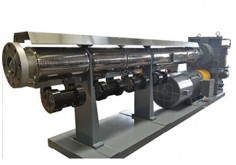
When comparing a single extruder for a new line, replacement project or capacity upgrade, buyers should define the processing requirements before confirming the screw diameter or motor power. Screw diameter and L/D ratio influence throughput, melting behavior, residence time and material homogenization, while the screw geometry and barrel material should be matched to the polymer and wear conditions.[3][8]
-
Confirm the polymer type and formulation, including whether the material contains recycled content, mineral fillers, glass fiber, flame retardants or corrosive additives.
-
Define the target hourly output, operating schedule and acceptable output variation so that the screw diameter, drive system and cooling arrangement can be evaluated as a system.
-
Match the screw structure to the process requirement, such as general conveying, improved melting, mixing, pressure stability, recycling or cable material processing.
-
Review the required L/D ratio according to material sensitivity, melting quality, mixing demand and any need for venting or longer processing sections.
-
Check compatibility with downstream equipment, including dies, filters, screen changers, pelletizing units, haul-off systems, cooling equipment and control interfaces.
-
Specify the expected wear and corrosion conditions so that the screw surface treatment, barrel liner and alloy solution can be selected appropriately.
-
Clarify whether the project requires commissioning support, spare screw-and-barrel sets, material trials, acceptance criteria or documentation for the production line.
Single Extruder Options by Application
The products in this category can be selected according to the material being processed and the downstream production method. A standard configuration may be appropriate for general polymer extrusion, while abrasive, recycled, filled or heat-sensitive materials may require a more application-specific screw profile, barrel treatment or temperature-control arrangement.
-
Single screw extruders for ceramic membrane production can be configured around the rheological and forming requirements of membrane materials and related extrusion dies.
-
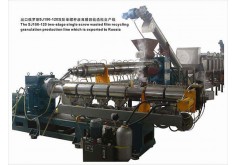
Recycling plastic extruders can be specified for the characteristics of recycled feedstock, including contamination risk, variable bulk density, moisture control and melt stabilization requirements.
-
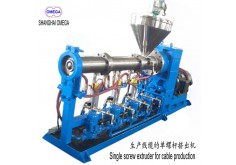
Single screw extruders for cable production can be matched with cable coating or insulation processes, where steady pressure, temperature control and coordination with downstream line speed are important.
-
Custom extrusion configurations can be developed for pipe, profile, sheet, film, pelletizing and other continuous polymer-processing applications when standard models do not match the required process.
Custom Screw, Barrel and Extruder Configuration
Shanghai Omega Machinery Co., Ltd. can configure single screw extrusion equipment around the customer’s processing conditions rather than supplying only a fixed machine format. Customization starts with the material, output target and downstream process, then extends to the components and operating functions that affect long-term production stability.
-
Screw diameter, effective length, L/D ratio, compression ratio, pitch, channel depth and screw profile can be evaluated for the target material and output requirement.
-
Screw and barrel materials can be selected for normal polymer processing, abrasive filled compounds, recycled material or corrosion-sensitive applications.
-
Barrel construction can be adapted with suitable heating zones, cooling arrangements, feed section design and wear-resistant or corrosion-resistant internal surfaces where required.
-
Drive power, gearbox configuration, temperature-control zones and electrical control requirements can be aligned with the planned production line.
-
Connection dimensions and interfaces can be coordinated with existing dies, screen changers, feeding systems and downstream equipment.
-
For projects requiring non-standard structures or new processing conditions, technical drawings, material information and production objectives may be needed before design confirmation and sample or trial arrangements.
Manufacturing Background for Extrusion Equipment
Shanghai Omega Machinery Co., Ltd. manufactures single screw extruders, twin screw extruders, screws, barrels and related extrusion components for industrial processing applications. The company’s production scope includes customized screw-and-barrel solutions, bimetallic barrels and wear-resistant alloy components for extrusion and injection molding machinery.
According to the company’s published technical information, Shanghai Omega Machinery Co., Ltd. operates production activities in Shanghai and Anhui. The Shanghai operation focuses on high-end alloy material research and manufacturing accuracy, while the Anhui facility is used for producing wear-resistant and corrosion-resistant alloy layers for bimetallic barrels and bimetallic screws. The company also states that it applies PM-HIP processing technology to improve material density and reduce casting defects in applicable components. These capabilities are relevant when a single extruder project requires component selection based on wear, corrosion, filled materials or extended service conditions.
Single Extruder FAQ
What materials can a single extruder process?
A single extruder can process many thermoplastic materials and compounds, but the practical suitability depends on material flow behavior, thermal sensitivity, filler level, moisture condition and the intended downstream process. PE, PP, PVC, cable compounds and recycled plastics may require different screw profiles, barrel materials and temperature-control settings.
How should buyers select screw diameter and L/D ratio?
Buyers should begin with the material type, required output, product form and downstream equipment. Screw diameter is closely related to throughput capacity, while L/D ratio affects melting, mixing and residence time. The appropriate combination should be confirmed against the actual process instead of using output alone as the selection basis.[3][16]
Can a single extruder be customized for recycled or filled plastics?
Yes. Recycled, mineral-filled and reinforced materials may require changes to screw geometry, feeding conditions, barrel liner selection, temperature control and wear-resistant component materials. The material composition and expected operating conditions should be provided during technical evaluation.
What information is needed to match an extruder with an existing production line?
Useful information includes the material formulation, required output, existing screw diameter and L/D ratio if available, die or downstream equipment details, line speed, connection dimensions, available power supply, control requirements and any current production issues such as unstable output, excessive wear or material degradation.
Are screws and barrels available as replacement components?
Replacement screws and barrels can be considered when the extruder model, drawings, key dimensions, material being processed and current component condition are available. For used equipment, dimensional verification is recommended before manufacturing replacement parts.
Can technical documents or testing information be provided?
The available documentation depends on the project scope and agreed technical requirements. Buyers can specify the drawings, material information, inspection records, trial requirements or acceptance criteria needed for their internal review before production is finalized.
Information to Prepare for an Extruder Inquiry
For a single extruder inquiry, providing clear process information helps determine whether a standard configuration or a customized solution is more suitable. The following details are typically relevant for technical evaluation and quotation preparation.
-
Target product type, such as cable coating, recycled plastic processing, ceramic membrane production, profile extrusion, pipe extrusion or pelletizing.
-
Raw material type, formulation, filler content, recycled content, moisture condition and any corrosive or abrasive characteristics.
-
Required production output, operating hours, planned production line speed and expected production environment.
-
Preferred screw diameter, L/D ratio, motor power or existing equipment model, if replacement or line matching is required.
-
Downstream equipment details, including die dimensions, screen changer, cooling equipment, haul-off unit, pelletizer or other line interfaces.
-
Customization requirements for screw and barrel materials, heating and cooling zones, electrical controls, spare components, packing and technical documents.
-
Whether material trials, samples, inspection records or other testing information are required before final project confirmation.